Redolence of Eden
In the name of God, the Originator of the Heavens & the Earth, who has promised gardens of lasting bliss to the believers
83:25
يُسْقَوْنَ مِن رَّحِيقٍۢ مَّخْتُومٍ
They are given to drink of a pure wine, sealed,
83:26
خِتَـٰمُهُۥ مِسْكٌۭ ۚ وَفِى ذَٰلِكَ فَلْيَتَنَافَسِ ٱلْمُتَنَـٰفِسُونَ
Whose seal is musk for this let (all) those strive who strive for bliss
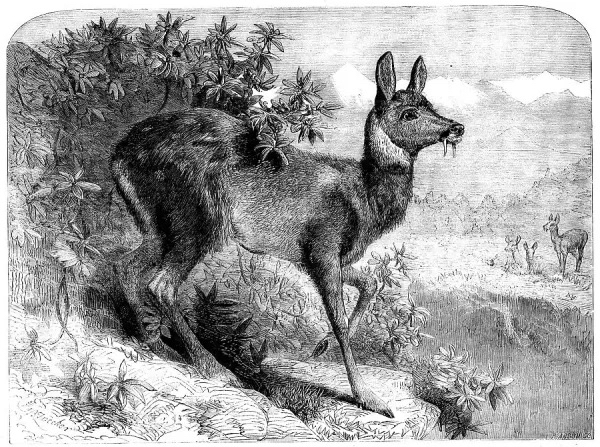 The Musk Deer (Moschus moschiferus), 1862.
Musk is a beauty of sensory delight which the Children of Adam have been blessed with, it's capable of stirring longing, a longing that shall not be fulfilled in this world.
Certainly among fragrants, musk stands apart, not out of coincidence but by association to our Beloved, peace and blessings be upon him.
It is reported that the scent of musk would emanate from him, peace and blessings be upon him, and his saying:
"Musk is the best of your perfume."
certainly contributed to the love of musk among the muslimeen.
Furthermore, it carries ties to the blood of the honourable — those who were wounded in the cause of God — for they will have their wounds bleeding on a day man will not dare move without permission nor utter the slightest sound; the honourable will certainly stand apart, for their flowing blood will radiate the scent of musk.
Musk in Islamic civilisation
It's no surprise, then, to find musk across centuries, held to the highest regard whether in the courts of the Abbasids or the halls of the Ottomans. Aswell on the clothes, hair & even food of mankind.
Alongside it being an extremely pleasant perfumery ingredient, it carried a portion of the Prophetic presence.
It was cherished above any other scent in Islamic civilisation, & it was this very civilisation that would give musk a permanent place within the world of perfumery.
Books authored containing any discussion of scent, whether they were authored by Ibn al-Qayyim, Al-Suyuti, Ibn Sina or even Christians like Ibn Masawayh would have musk at first place with no close second; this is unmistakably the influence of the Prophetic tradition in Islamic civilisation.
Among the muslimeen, a man would even come up with the striking idea of mixing musk into the mortar for the construction of a Mosque, inspired by the hadith mentioning the mortar of Paradise being musk.
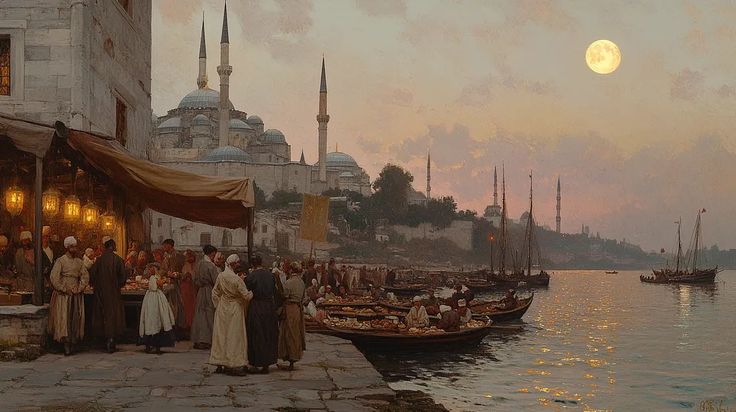
The Ottoman traveller, Evliya Çelebi writes the following about a Mosque in Diyabekir, in eastern Anatolia on the upper Tigris.
❝The Ipariye Mosque was built by a wealthy merchant trading with China. He had seventy loads of musk of Khotan mixed into the mortar for its walls, which is why it is called the Ipari—that is, musk-scented— mosque. And indeed, if one sniffs, in humid weather, near its walls, one’s nose gets perfumed with the fragrance of musk. Its domes are not covered with lead. However, it has a large congregation and is never without attendance in the morning or evening.❞
Musk & Kingship
It's rather unsurprising to find that musk was reserved for the upper echelons of society, given its high cost & scarcity.
Aristocrats were expected to make use of musk & expensive perfumery, and this was even more true for royalty.
Royalty were expected to perfume their skin, clothes, hair, beards & even sandals, surely no one would mistake the scent of musk on them.
Al-Masʿūdī, in his Murūj al-dhahab wa maʿādin al-jawhar (Meadows of Gold & Mines of Jewels) notes that the best of musk was used by kings & rarely available to merchants.
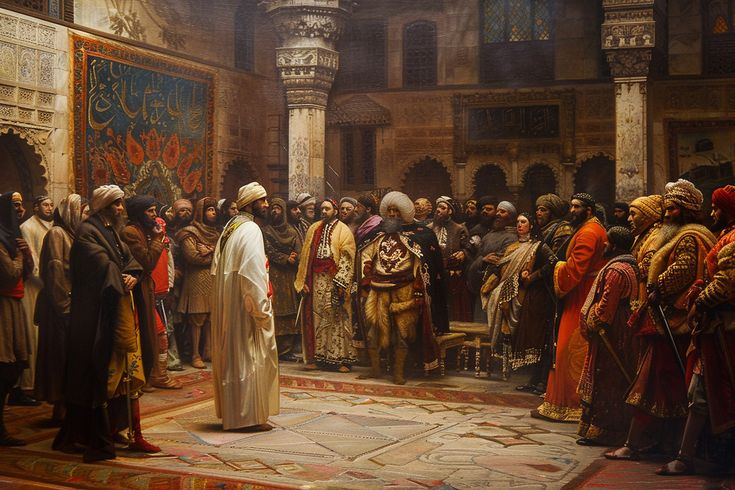
Musk bespoke royalty, al-Tabari records an incident of a poet who went to recite a poem infront of al-Ma'mun, the poet arrived at his army camp & met him but did not recognize him, however, he certainly noticed the scent of musk & ambergris coming from him.
Al-Ma'mun offered the poet a reward, upon which he started reciting his poem, then he came to realise the identity of his benefactor in terror as part of the army arrived & saluted Al-Ma'mun.
Musk in food
Musk would be used to perfume pots & dishes, with the intent of perfuming the mouth, for health benefits & for sake of believed food preservation. (which has some biological basis)
Today, musk is being studied as an additive in food again, though it can be assumed it's with usage of synthetics.
Additionally, it's worth noting that during medieval times, perfumery, food & the medical field were intimately linked based on the humoral theory, as such it's no surprise to find those three topics overlapping in the earliest Arabic cookbook dating to the 10th century Abbasid caliphate, authored by Ibn Sayyar al-Warraq.
He mentions in it musk among other aromatics like ambergris & rosewater with their usages across recipes, pots & their medical properties, taken from the medical books from the likes of Ibn Sina.
Misk, Musk & the deer
Strangely enough, despite musk being advertised to be contained in many consumables revolving around scent one will find difficulty coming across a person who has encountered misk, the scent referred to in the glorious Qur'an.
From here on, "misk" shall be used for the scent of the Messenger, peace and blessings be upon him, & "musk" for "musky" scents.
For musk/musky is used as a category for many type of scents which include misk, synthetics inspired by misk & other scents obtained from animals like civet musk, and this has been the case historically even prior to synthetics.
What mostly roams our world of musk are synthetics, of which, some carry softness & warmth, mirroring an aspect of diluted misk, others whom attempt to gain the deeper animalic scent of pure misk, but they are, at best, shadows cast by something far more complex.
For synthetics are simplistic, we're far from capable to capture the complexity of misk in a laboratory.
Synthetics have become the go-to for any "musky" scent, consequently, knowledge of misk has disappeared from the general public, resulting in a possible disconnect with the misk referred to in the Qur'an & ahadith.
The Musk Deer
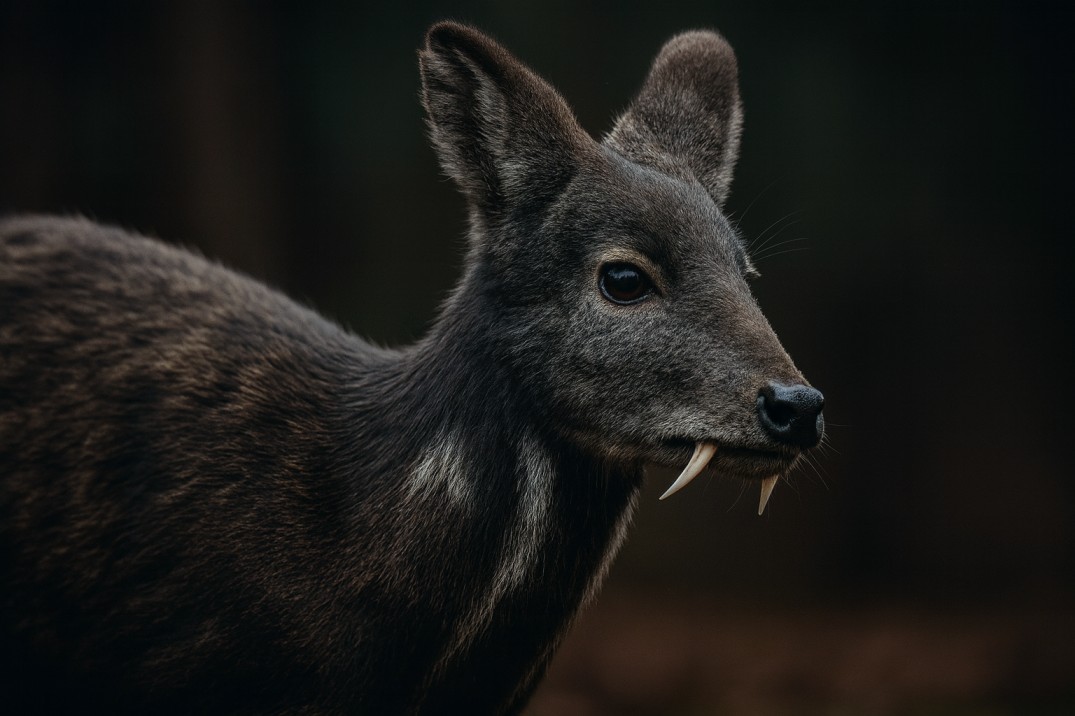 Male musk deer, distinguished by it's protruding upper canine teeth.
Authentic misk is drawn from the gland of the male musk deer, which is positioned roughly in the lower stomache area.
The historic range of these species of musk deer encompasses most of the forested and semi-forested highlands of Eastern Eurasia.
Additionally, they live at high elevations; it seems that 1500 meters is the lowest they go.
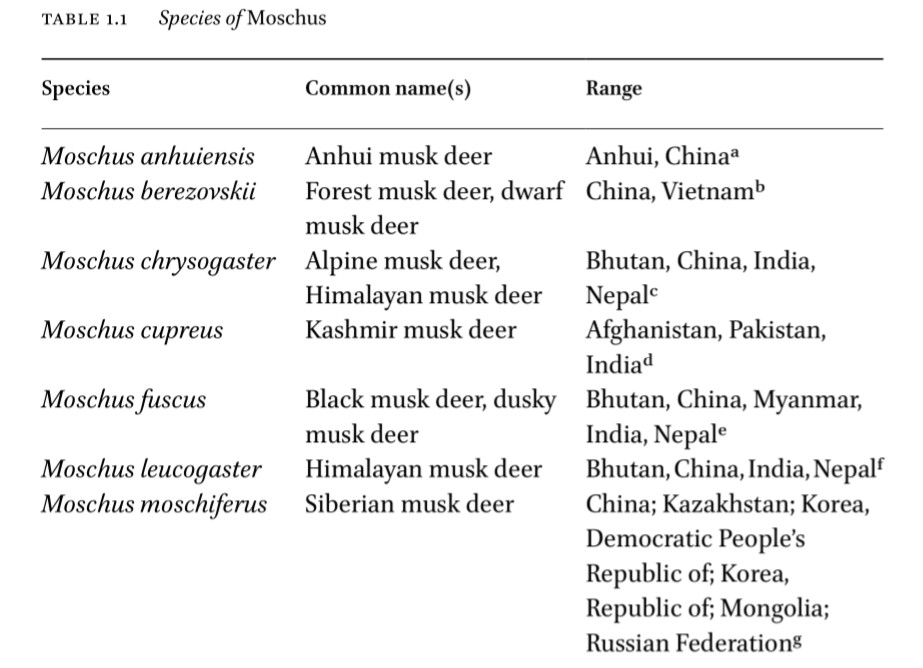 Types of musk deer & countries of their presence.
Exploitation for misk & habitat loss led to a decline in its population resulting in the deer being quite endangered, as a response several governments, including China, India & Russia banned/restricted hunting the deer & the trade of the misk to keep the population stable.
As mentioned earlier, misk was scarce, prior to the regulations, in the 1960's, 1970's & early 1980's, the yearly average of misk attained was about 325kg which, even then, was far below industry demands due to which synthetics took the lead for the name of "musk".
Closing remarks
What remains accessible to most are imitations of misk but none that compare, the words of Ibn al-Qayyim, may God, the Exalted, have mercy on him, are certainly appropriate to describe it:
“It is the king of the varieties of aromatics, their noblest and sweetest (aṭyab). It is that about which proverbs are coined, and other things are compared to, while it is not compared to anything else. It is the sand-dunes (kuthbān) of the Garden [of Paradise].”
Misk points to something yet to be attained, a desire for a reality better than this one.
It brings forth a longing nothing of this world can satisfy, for misk is the mud of the rivers of paradise & the mortar of it's dwellings.
So:
وَفِى ذَٰلِكَ فَلْيَتَنَافَسِ ٱلْمُتَنَـٰفِسُونَ
"...for this let (all) those strive who strive for bliss"
May our hearts be anointed with misk.